TSA medication screening: packing liquids and keeping them accessible
Keep medically necessary liquids accessible, explain them at TSA screening and check separate destination rules before flying internationally.
Rumbía Editorial Team
Rumbía publishes practical travel guides based on official sources and clearly scoped booking conditions.
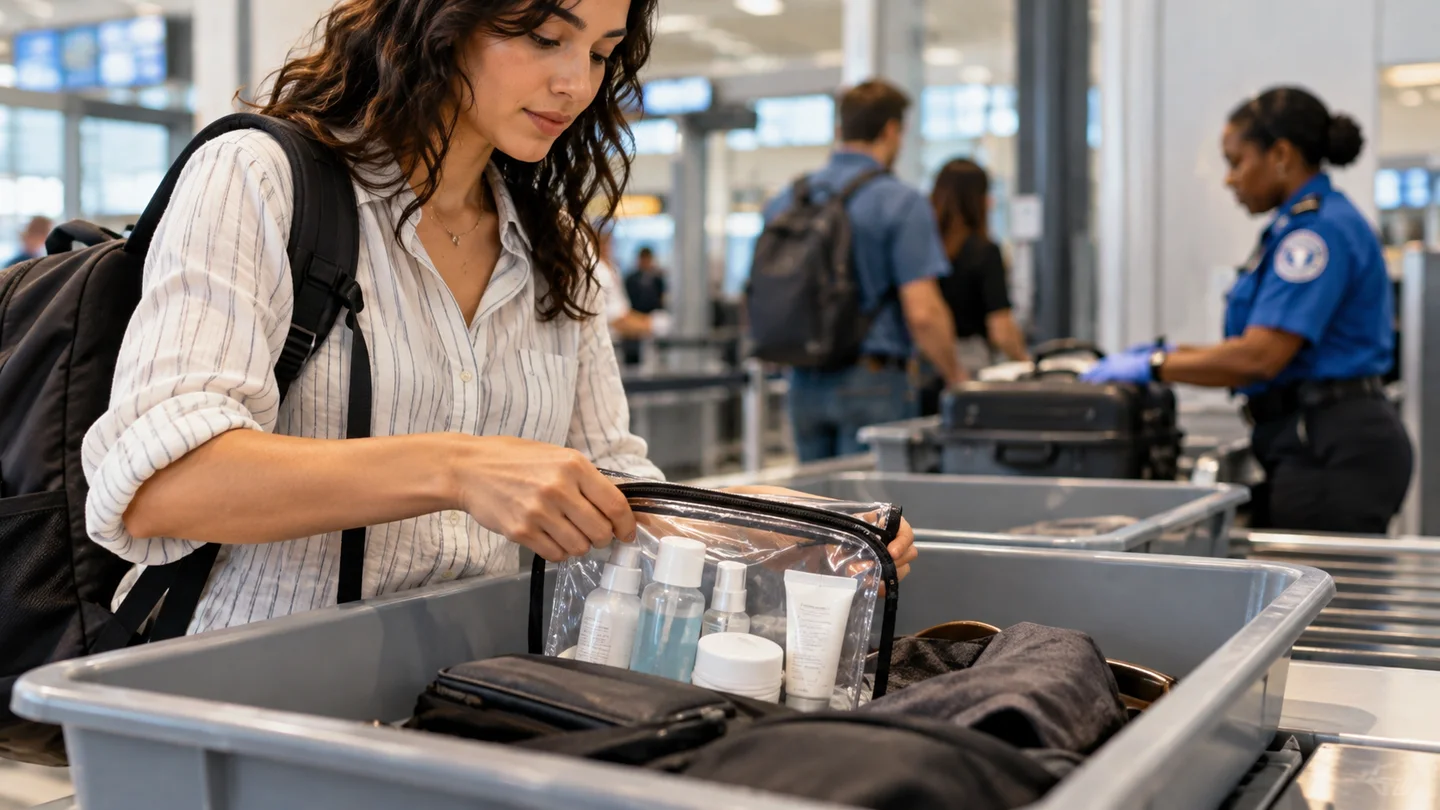
Medically necessary liquid medication can travel through a TSA checkpoint in reasonable quantities above the ordinary 3.4-ounce/100-milliliter limit. Tell the officer at the start of screening, keep the supplies accessible and be ready for a separate inspection. The exception changes how you pack; it does not remove screening.
The most useful preparation is to separate three questions: how the medicine is screened, how it must be stored and whether it may enter your destination country. TSA answers the first. Your pharmacist, clinician or product instructions can help with storage, while destination authorities determine import conditions. One answer cannot stand in for all three.
Before packing: make a medicine-specific plan
List the items you actually need to carry: tablets, liquid containers, injection supplies, a device and any cooling materials. Keep routine cosmetics out of this list. A prescription liquid and a large bottle of ordinary shampoo do not qualify for the same treatment simply because both sit in a medical-looking pouch.
TSA's medication questions and screening tips explain that liquid medicines should be declared and may need additional inspection. Solid medicines can also be carried, subject to screening. If you want a visual inspection of medication instead of X-ray screening, request it before the items enter the X-ray tunnel.
Do not reduce a prescribed supply or change treatment to make packing easier. Ask a qualified health professional about the amount and storage arrangements appropriate for your journey. This guide addresses travel preparation, not dosing or treatment.
Pack for access, identification and repacking
A useful arrangement has a small accessible group of medical supplies and a separate toiletries bag. You should be able to explain the medical group without emptying the entire suitcase onto a checkpoint table.
- Keep identification available. Retain labels and useful prescription or product documentation. TSA's packaging rules are not the only rules that may apply.
- Make liquids easy to show. Put them where you can remove or present them when directed, rather than underneath clothes and electronics.
- Organize related supplies together. Keep the medicine and the items needed to use or cool it identifiable as a group.
- Protect documents from leaks. A closed pouch can help contain a spill, but it is a packing choice rather than a substitute for declaring liquids.
- Keep essential access in mind. TSA recommends carrying medication in cabin baggage when you may need immediate access. Also plan what you will retain if your main cabin suitcase is checked at the gate.
Hypothetical example: a traveler has a liquid medicine, tablets and an ordinary face cream. The medicine and its supporting supplies are prepared for the medical screening procedure. The face cream stays in the ordinary liquids allowance. The traveler does not pour the medicine into an unmarked cosmetic bottle merely to match the toiletries.
For the separate rules governing nonmedical products, see our TSA liquids packing guide. Keeping those two decisions separate makes both the packing and the checkpoint conversation clearer.
Cooling packs need their own explanation
Do not assume every frozen or partly melted item follows the same rule. TSA's item directory distinguishes ordinary frozen liquids from medically necessary cooling supplies. Its gel-ice-pack guidance permits reasonable quantities of medically necessary packs even when melted or slushy, with declaration for inspection.
Explain what the cooling material is for before screening. Separately, confirm with your pharmacist or the product instructions how the medicine must be stored during the entire trip. Passing airport security does not demonstrate that a cooler maintains the required conditions for a long delay, a transfer or an overnight journey.
If your arrangement involves a device, unusual cooling method or other item with transport restrictions, ask the operating airline as well. Avoid relying on an assumption that a medical purpose automatically resolves every aircraft carriage restriction.
At the checkpoint: speak before the bag is scanned
- Declare the medically necessary liquids. Do this at the beginning, rather than after an officer discovers an oversized container.
- Explain relevant equipment. Tell the officer about a medical device or associated supplies and ask how to present them.
- Make any inspection request early. A request for visual medication inspection should come before X-ray screening.
- Follow the item-specific instructions. The officer may need to inspect or test supplies. Do not assume that declaring an exception completes the process.
- Recheck your belongings afterward. Before leaving the screening area, make sure you have the medicine, supplies and documents you brought.
If a direction is unclear, explain the specific item and ask for clarification. You can request a supervisor when you need help resolving a screening question. TSA's medical-condition and disability guidance is the official starting point for additional screening support, including TSA Cares.
Check labels and the international route separately
TSA does not require prescription bottles for its screening process, but U.S. state labeling laws and foreign entry rules may differ. Keeping original identification can make the product easier to recognize; it is not universal proof that you may import it.
Write down the countries you will enter and the actual medication ingredients, not only a familiar brand name. Check the relevant authority's requirements before departure, especially when an authorization or supporting document may be needed. A change of flights can add a new transit or entry question.
For travel to Japan, our Japan preparation guide for U.S. citizens helps organize the wider destination checks. Do not treat this TSA article as Japanese import approval or as a declaration that any particular medicine is permitted.
Frequently asked questions
Does a liquid medicine have to fit in my quart-size toiletries bag?
No. Medically necessary liquids have a separate exception for reasonable quantities. Declare them and present them for the required inspection.
Can I ask for medication to be inspected without X-ray?
TSA says you may request a visual inspection of medication. Make the request before the items are sent through the X-ray tunnel and follow the officer's instructions.
Are partly melted medical cooling packs automatically prohibited?
No. TSA has specific guidance for medically necessary cooling packs. Explain their purpose and declare them for inspection rather than applying the ordinary frozen-liquid rule on your own.
Does TSA approval mean the medicine is legal at my destination?
No. Security screening and medicine import permission are separate. Check the destination and any applicable transit requirements for the actual product and quantity.
Should I change my treatment if the packing arrangement is inconvenient?
Seek advice from an appropriate clinician or pharmacist. An airport packing guide cannot determine a safe change to your treatment.
Official TSA guidance reviewed October 15, 2026. Screening preparation only; no individual medical or import assessment is provided.
About Rumbía Editorial Team
Rumbía publishes practical travel guides based on official sources and clearly scoped booking conditions.



Interested in travel updates?
Leave your email if you would like to hear from Rumbía about new guides and articles.
Your request is emailed to Rumbía. This form does not start an automatic newsletter subscription.