Airport liquids: what the TSA 3-1-1 rule actually covers
Understand the TSA 3-1-1 liquids rule, choose travel-size containers and prepare your toiletry bag without confusing airline baggage limits with screening rules.
Rumbía Editorial Team
Rumbía publishes practical travel guides based on official sources and clearly scoped booking conditions.
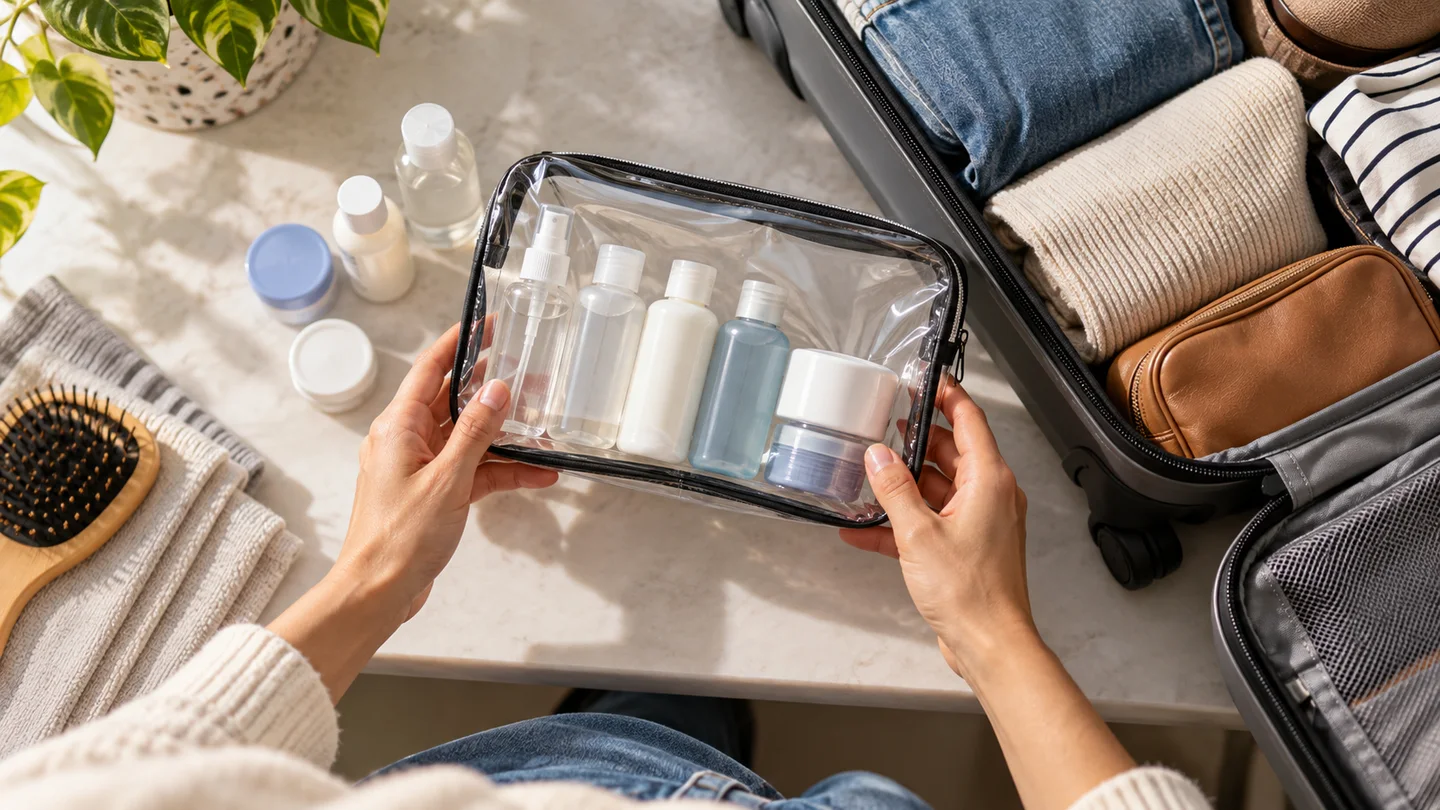
For a standard TSA checkpoint, pack ordinary carry-on liquids in containers of 3.4 ounces (100 milliliters) or less, inside one quart-size bag. The rule covers more than drinks: gels, aerosols, creams and pastes also need attention. A carry-on allowance from your airline does not replace the screening rule.
This guide is for U.S. airport security. Your departure airport outside the United States may apply different procedures. Official guidance checked October 15, 2026.
Start with the containers, not the suitcase
Lay out the toiletries you actually need during the journey. Check each container's stated capacity, then see whether the collection fits comfortably in the clear bag. A travel kit that only closes when forced is inconvenient to inspect and easy to spill.
The official TSA liquids guidance is the place to check the current rule. TSA also explains the core limits in its official 3-1-1 video. Use the agency's guidance rather than a social post about a possible future rule change.
A practical packing order
- Separate toiletries from medicines and any items requiring a specific exception check.
- Read the capacity on every ordinary liquid container.
- Put the selected toiletries together in the liquids bag.
- Keep that bag accessible rather than underneath tightly packed clothes.
- Check the next airport's rules if your journey involves another screening.
Leave yourself a choice before arriving at security. If a toiletry does not belong in the cabin bag under the applicable rule, decide at home whether to leave it behind, obtain an appropriate container or put it in checked baggage when permitted. Dangerous-goods restrictions can still apply in checked bags.
Exceptions deserve their own check
Do not use this ordinary-toiletries checklist to decide how to pack essential medication or infant feeding supplies. Those categories have additional screening guidance. Identify the exact item and read its official entry; an exception for one product does not cover everything in the same pouch.
Does a larger cabin bag let me bring more liquids?
No. Cabin-bag dimensions and security screening address different questions. If you are flying Delta, compare your luggage separately with our Delta baggage guide.
What should I check on a connecting journey?
Find out whether the next airport sends connecting passengers through security again. Pack for the entire itinerary rather than only the first checkpoint. For a wider trip-planning check, review our Japan travel preparation guide for U.S. citizens when that is your destination.
About Rumbía Editorial Team
Rumbía publishes practical travel guides based on official sources and clearly scoped booking conditions.
Interested in travel updates?
Leave your email if you would like to hear from Rumbía about new guides and articles.
Your request is emailed to Rumbía. This form does not start an automatic newsletter subscription.