First international connection: separate immigration from boarding time
Separate immigration, baggage, security and boarding deadlines when planning your first international connection. Confirm the process for the actual airport.
Rumbía Editorial Team
Rumbía publishes practical travel guides based on official sources and clearly scoped booking conditions.

For an international connection, plan to reach the onward gate by its boarding deadline—not merely before the departure time. Between flights you may need passport control, baggage collection, customs, a terminal transfer or another security check. The time printed between the two flights is not all available for walking to the next gate.
Start by identifying the route you will actually follow. An international arrival connecting to a domestic flight can involve a different sequence from two international flights in the same airport. A through-checked bag, a boarding pass and permission to enter or transit are separate questions.
Draw the connection as a sequence of steps
Write the arrival airport and terminal at one end and the onward gate at the other. Then fill in the steps that apply to your itinerary:
- Leave the aircraft and reach the transfer route.
- Complete passport or immigration checks if required.
- Collect checked baggage if your route requires it.
- Complete customs formalities where applicable.
- Recheck baggage or visit the onward airline's desk if needed.
- Move between terminals or airports, if the booking requires that.
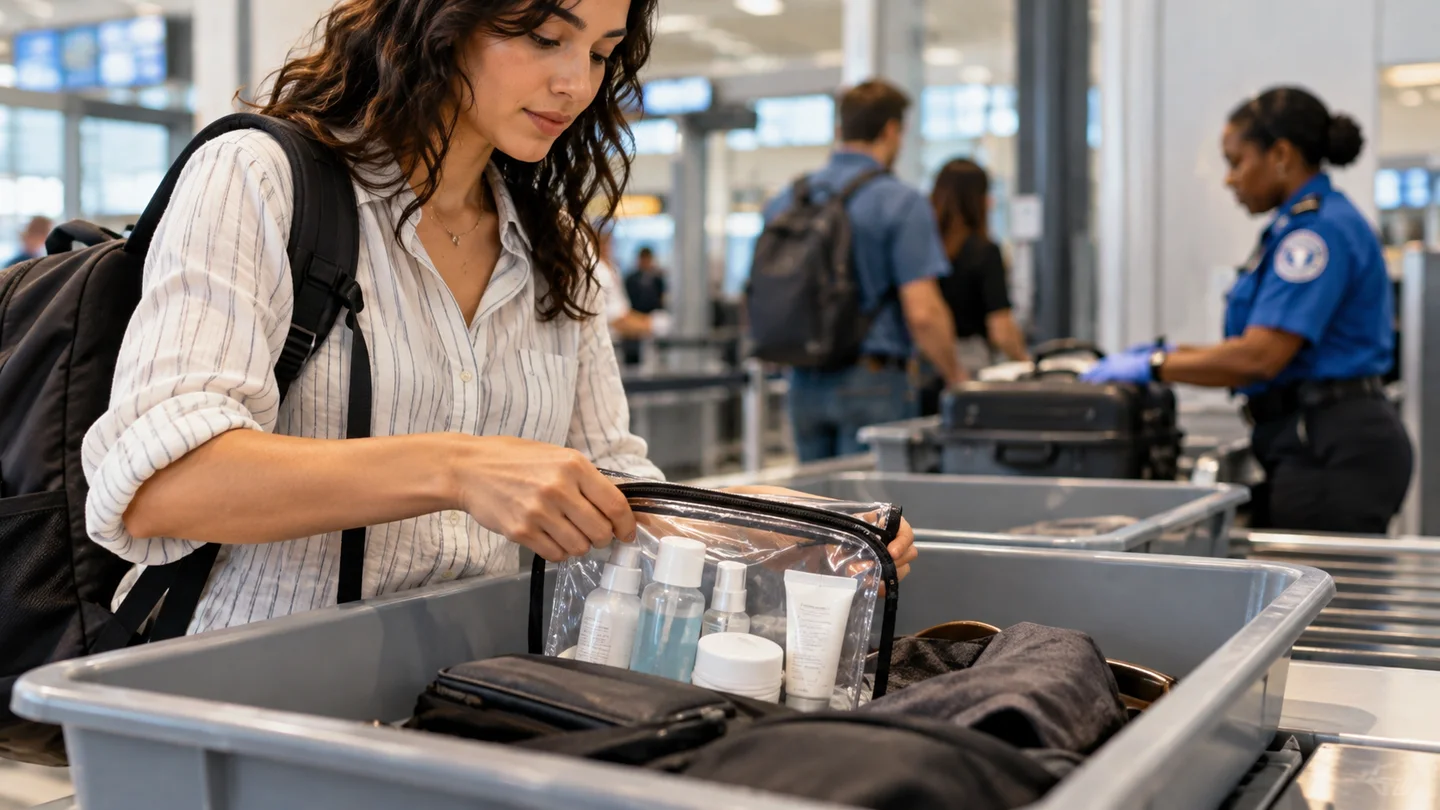
- Pass any required security screening.
- Reach the correct gate before its deadline.
This is a planning list, not a claim that every airport uses this order. Ask the operating airline and consult the airport's official transfer information. If the answer is that you can stay airside, establish exactly which checks still remain.
Two examples show why the airport and route matter
Arriving in the United States and continuing to another U.S. city
CBP's entry guidance explains that travelers normally clear U.S. Customs and Border Protection at the first U.S. port of entry. They do not postpone that clearance simply because another American city is their final destination. Travelers already processed at a CBP preclearance location follow a different arrival situation.
Confirm baggage instructions for your flight rather than assuming either that every bag transfers automatically or that every passenger must always collect it. CBP's International Remote Baggage Screening initiative permits eligible participating arrivals to continue without baggage recheck unless referred for inspection. Its existence does not mean your route participates. Follow the instructions for your actual service.
Connecting through Amsterdam between Schengen and non-Schengen flights
Schiphol's passport-control guidance distinguishes travel within the Schengen zone from crossing its external border. A connection that crosses that border needs to account for passport control. Airport security and border inspection perform different functions; completing one does not necessarily complete the other.
Schiphol's transfer information also explains that baggage is usually transferred onward, while separate-ticket travelers need to collect and check it in again. Check your bag tag and the carrier's instructions. That airport example should not be applied automatically to another hub.
Work backward from the earliest relevant deadline
Find the onward flight's gate deadline and any check-in or bag-drop cutoff that applies. If you need to collect and check a bag again, the bag-drop deadline can matter before you ever approach the gate. A gate-to-gate walking estimate leaves out that task.
Hypothetical example: your itinerary shows an arrival at 09:00 and departure at 11:00. Your onward instructions require you at the gate by 10:20. That leaves eighty minutes from the listed arrival to the gate requirement, before allowing for getting off the aircraft, queues and transfers. It is not a two-hour window for the entire process. These example times are not an airline rule or a recommendation that the connection is sufficient.
Check local dates as well as times, particularly for an overnight connection or a flight across time zones. If a terminal shuttle is involved, confirm its operating hours and route. A connection that works on a map may have extra steps at the time you travel.
Understand what separate tickets change
If you built the journey from separate purchases, ask each airline how it handles your baggage, boarding documents and a late arrival from the other flight. Do not assume the second booking includes protection against a missed connection. Read any protection service you purchased rather than relying on a general statement that a website sold both flights.
For an itinerary sold as one connecting journey, ask the issuer which assistance and rebooking arrangements apply if the connection is disrupted. That does not mean you can ignore boarding deadlines or document requirements. It means you should understand the actual booking's handling instead of treating it like an unrelated second purchase.
When comparing options, include the practical cost of a self-transfer: baggage handling, landside entry if needed, transport and the consequences of missing the onward service. The cheapest fare is not necessarily the arrangement with the lowest overall risk.
Keep documents and essential items within reach
Save boarding details, terminal information and reservation references offline where possible. Keep the passport and entry or transit documents you need accessible. If your main cabin suitcase is taken at the gate, retain important personal supplies and documents rather than leaving them inaccessible in that bag.
For another TSA screening, our TSA liquids packing guide helps with ordinary cabin liquids and their exceptions. Airline baggage allowances remain a separate issue; our Delta baggage guide is relevant when Delta is your carrier.
If you need mobility or other assistance, arrange it through the appropriate airline or airport process and explain the connection. Do not plan on an assistance request removing border or security checks or guaranteeing a particular queue time.
If the inbound flight becomes late
Check the current onward gate and status, then ask the carrier or transfer desk about your booking's options. State whether the flights are on the same itinerary, whether you have checked baggage and which onward deadline is approaching. Do not leave a transfer route to collect baggage based only on an assumption; clarify the instructions.
Retain disruption notices and any replacement itinerary. Before buying another flight, understand what the airline is offering and how a new purchase could affect the existing reservation. Notify separately booked hotels or transfers when necessary.
Frequently asked questions
Does having an onward boarding pass mean I can skip immigration?
No. A boarding pass does not determine whether your route crosses a border. Check the airport's transfer procedure and your documents.
Is there one safe connection time for every international airport?
No. Terminals, border checks, baggage, ticket arrangements and assistance needs differ. Use the actual itinerary and deadlines.
Will baggage checked to the final city always transfer without collection?
Do not assume so. Some routes require collection and recheck, while specific programs change that procedure. Follow the instructions for your flight.
Can a late arrival make the onward flight wait for me?
Do not rely on that. Contact the carrier about the connection and alternatives rather than treating the departure time as flexible.
Does passport control replace security screening?
No. They are different checks. Your route may involve one, both or different transfer procedures.
Official border and airport guidance reviewed October 15, 2026. Confirm the specific route with the operating airline and airport.
About Rumbía Editorial Team
Rumbía publishes practical travel guides based on official sources and clearly scoped booking conditions.


Interested in travel updates?
Leave your email if you would like to hear from Rumbía about new guides and articles.
Your request is emailed to Rumbía. This form does not start an automatic newsletter subscription.