Hotel card authorizations: tracking a hold without assuming a refund date
Identify pending authorizations and settled hotel charges before requesting action. Keep the final bill and ask the hotel and issuer about the actual transaction.
Content Writer Specialist for Rumbía’s English blog, focused on practical travel guidance, airline policy explainers, baggage and ticketing questions, and reader-friendly destination planning.
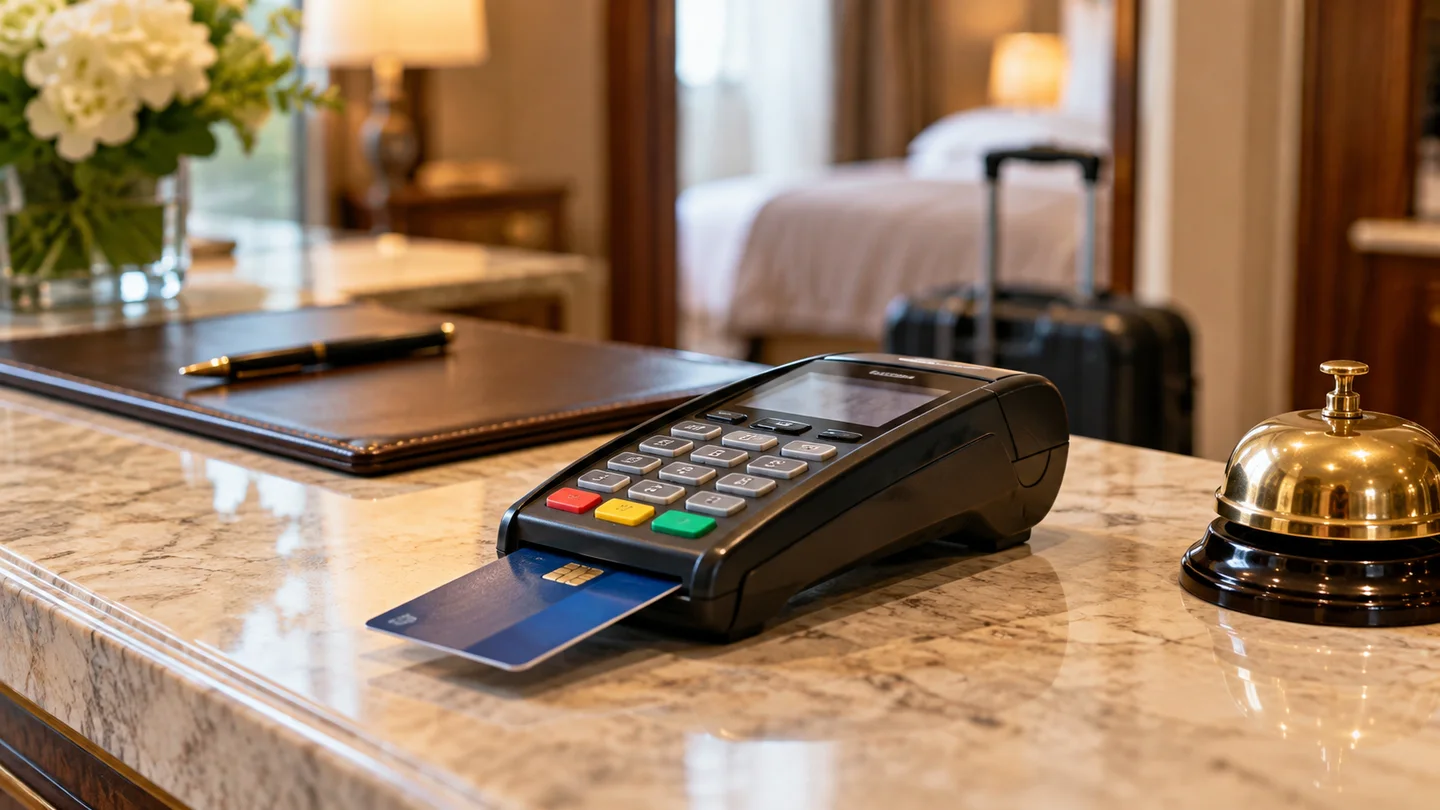
A pending hotel card authorisation can reduce your available money or credit without being a final charge. To track it, compare the authorisation, final hotel bill and posted card transaction. Ask the hotel what it submitted and the issuer what remains pending; do not begin with a universal release date found online.
A release of an unused authorisation and a refund of a settled payment are different processes. Knowing which one applies makes the next conversation much more useful.
Identify the transaction before disputing the amount
Open the card application's transaction detail and note whether it is pending, authorised or posted. Record the original currency, amount, merchant description and date. Then compare it with the final hotel invoice and any separate settled charge.
Suppose, hypothetically, the hotel authorises $600 and the final invoice is $480. If the app shows $600 pending plus $480 posted, you have not established a $1,080 settled payment. Ask whether the original hold remains separately active and what is being released. If both $600 and $480 are posted, however, the question becomes why two payments settled, rather than when an unused hold expires. Conversely, two posted payments for the same service deserve a different inquiry from an old pending authorisation beside a final charge.
BBVA Mexico's explanation of retained funds provides a bank-specific account of pending availability. Use your issuer's descriptions for your account rather than assuming every app uses the same labels.
Ask the hotel for the action and reference
Contact the property's billing team through a verified channel. Give the stay reference, checkout date and last four card digits, and ask whether the authorisation was used for settlement, cancelled or released. Request the date and reference of any release action that it can provide.
Keep the invoice and written response together. If the final bill includes something you dispute, ask for the itemised explanation separately. Removing an authorisation will not, by itself, resolve disagreement about a room-service charge or additional night.
Hilton's payment FAQ states that at checkout the final price is charged and the hold is released within 72 hours, but expressly warns that the card issuer may take longer than 72 hours. That is a useful Hilton-specific follow-up point, not a promise that your available balance changes exactly three days after checkout. If the property confirms release, ask the issuer about the remaining authorisation rather than requesting a second refund of money that never settled.
Ask the issuer what it can actually see
Provide the hotel's response and ask whether the issuer sees an active authorisation, settlement or reversal. Request the timeframe applicable to that transaction and what event starts it. Ask what evidence it accepts if the property says it has already released the hold.
A useful call note records the case number, transaction status, next step and date for follow-up. “The hotel says it is done” is less useful than a dated release reference connected to the pending amount.
Check spending availability while travelling. A debit-card hold can affect funds available for other purchases; a credit-card authorisation can affect the available line. Plan the practical impact without treating the amount as a permanent loss before its status is established.
Reconcile currency and payment history
If the card account and hotel bill use different currencies, keep the original amounts visible. Ask the issuer to explain conversion or separate fees rather than assuming a changed converted display proves another hotel charge.
Record deposits or prepaid amounts separately from checkout payments. If another person paid, establish which card was used for which part of the stay.
Keep receipts labelled by purpose. Our hotel and transport evidence guide offers a practical way to keep the invoice, payment record and provider response connected.
Follow up on a defined issue
If the case-specific timeframe passes, return to the existing reference with an updated transaction record. State what remains unresolved: pending availability, duplicate posted charge or a bill you dispute. Ask the issuer for its appropriate complaint route if necessary.
Share only relevant redacted records through official channels. Never send a login code or full card credentials to someone claiming they need them to “unlock” a hotel deposit.
Frequently asked questions
Will a released hold appear as a new refund?
Not necessarily. An unused authorisation may disappear or stop reducing availability without a separate credit entry. Ask the issuer to confirm the outcome.
Do two visible entries always mean two charges?
No. Compare whether each is pending or posted and reconcile them with the final invoice.
Can the hotel promise the exact date my available balance changes?
Ask what it submitted and then confirm issuer processing. Do not assume the property's action and the bank's display update occur together.
What evidence is most useful?
Invoice, dates, original amounts and currencies, transaction statuses, and any hotel release reference or bank case number.
About William Smith
Content Writer Specialist for Rumbía’s English blog, focused on practical travel guidance, airline policy explainers, baggage and ticketing questions, and reader-friendly destination planning.
LinkedIn profile


Interested in travel updates?
Leave your email if you would like to hear from Rumbía about new guides and articles.
Your request is emailed to Rumbía. This form does not start an automatic newsletter subscription.