London contactless payments: keep the same card for entry and exit
Use one payment method consistently on London transport, check TfL's touch-in and touch-out rules and keep card and phone journeys separate.
Content Writer Specialist for Rumbía’s English blog, focused on practical travel guidance, airline policy explainers, baggage and ticketing questions, and reader-friendly destination planning.
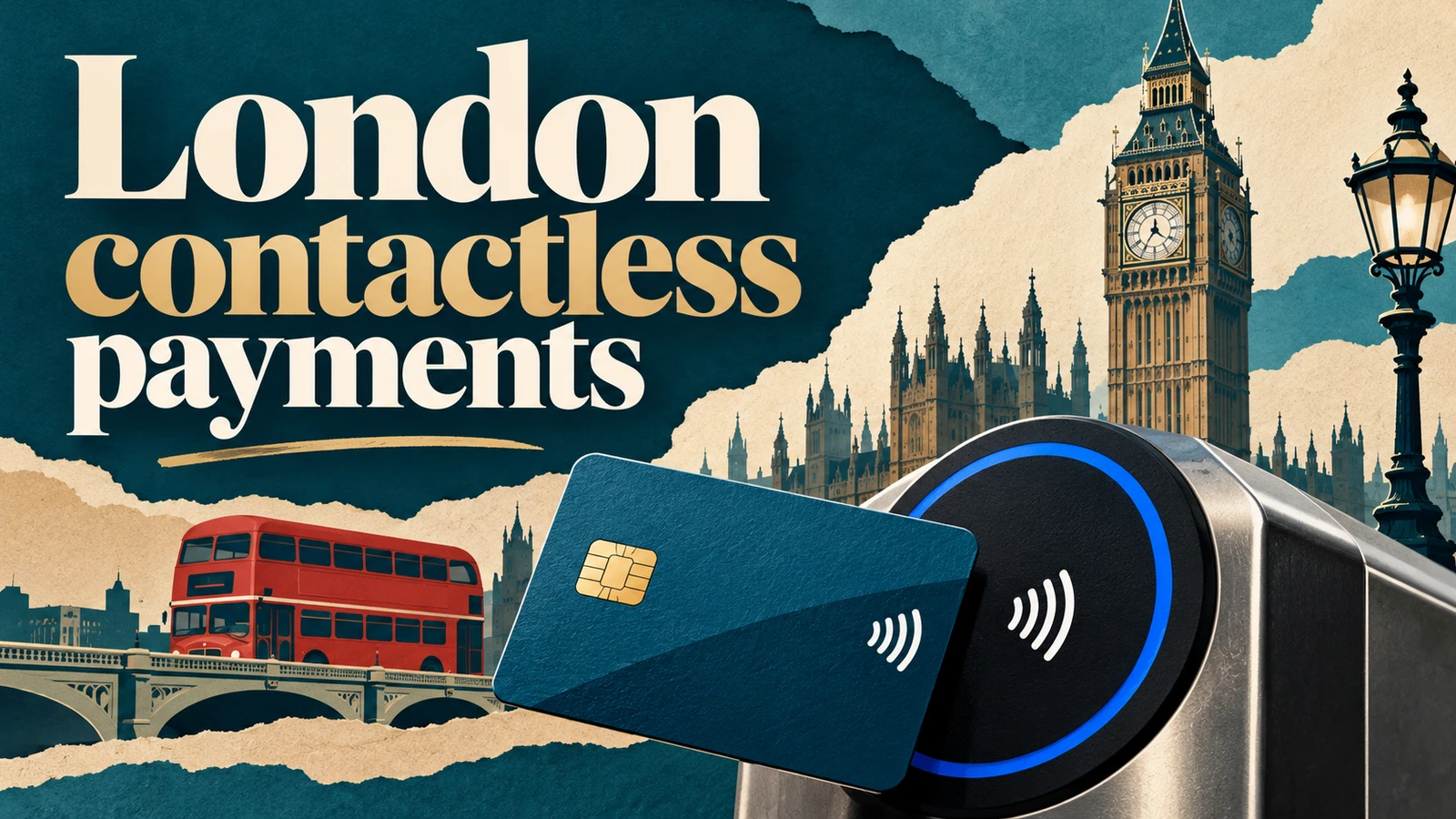
On London transport, use the same contactless card or the same device throughout a journey. A physical bank card, its phone-wallet version and a watch linked to the same account should not be swapped between entry and exit. TfL needs a matching journey record to calculate the fare correctly.
Choose the method before approaching the reader and keep it accessible until the trip ends. That small habit helps prevent incomplete journeys, unexpected charges and confusion when checking travel history.
One payment method means the actual card or device
TfL's pay-as-you-go guidance explicitly warns against entering with an iPhone and exiting with a watch or contactless card. Sharing the underlying bank account does not make those touches the same travel record.
Consider a hypothetical airport arrival: you use a phone at the first barrier, then take out the physical bank card at the destination. You may think you have used one account, but the transport system has not necessarily received a matching start and finish. Show the same phone payment method at both ends instead.
Take the intended card out of your wallet rather than tapping several cards together. If traveling with another person, arrange a separate card or device for their journey. Do not repeatedly tap one method hoping it has bought two complete journeys.
The reader sequence depends on the transport mode
TfL's touching-in-and-out instructions say to use yellow readers at the start and finish of rail journeys such as Tube, DLR, Overground and Elizabeth line. On buses and trams, touch in only. Do not copy a bus habit when leaving a railway station.
| Situation | Action to remember |
|---|---|
| Starting a rail journey | Touch the chosen card or device on the yellow reader |
| Finishing that rail journey | Touch out with the same method |
| Boarding a bus or tram | Touch in; do not add a rail-style touch out |
| Changing trains at a pink route reader | Follow TfL's instructions for recording a route avoiding Zone 1 |
Read the station signs rather than assuming an open gate means no validation is needed. A barrier's position is not a record of your journey. During a transfer, follow the signs for that route so you do not unintentionally leave the paid area and start another trip.
Pink readers have a particular route-recording purpose; they do not replace the yellow start and end touches. If unsure at a complicated interchange, ask staff before leaving the station or tapping another method.
Check coverage before applying a London rule elsewhere
Pay as you go is available across TfL services and parts of the wider rail network, but check the exact origin and destination. An airport name on a route planner is not enough to establish payment acceptance on every train serving it.
Use the official journey and fare tools for the service you intend to take. Do not assume that a premium airport train and an urban route have identical fares or that a payment method valid on one is valid on the other. This guide does not quote a universal airport fare.
The same method also matters when comparing accumulated travel charges. If you distribute your journeys across different payment methods, do not expect the system to treat your personal recollection as a single continuous payment history.
Prepare a phone you can still use on arrival
If the phone is your ticketing method, maintain enough battery and access to the selected wallet. Keep it with you during travel and inspection. A screenshot of a bank notification does not reproduce the contactless method used at the reader.
Before a long travel day, decide which device you will use and how you will charge it. A backup physical card can be useful for later travel, but changing to it halfway through a rail journey can create a record problem. If the original device stops working, ask staff how to resolve the current journey.
TfL says many overseas contactless cards work, while issuer charges or compatibility restrictions can apply. Check those with the issuing bank. A currency-conversion fee and an incorrect transport journey charge are different issues and require different questions.
Investigate an unexpected charge using the journey details
Record the date, stations, approximate times and exact card or device used. Review the official contactless account or support route for the journey history. A bank statement alone may not explain whether a start or finish is missing.
When asking for help, describe the reader problem or accidental device switch honestly. Keep any case reference and follow-up instructions. Do not assume that every higher charge is a duplicate transaction or that an adjustment is guaranteed before the facts are reviewed.
Ground transport also needs to fit your hotel arrival. Our hotel-night guide for midnight arrivals explains the booking-date issue. Check guest details separately using the hotel reservation-name guide; correct train payment cannot fix a room reserved under the wrong details.
Frequently asked questions
Can I touch in with my phone and out with my watch?
No—use the same device and payment method for both. TfL identifies phone, watch and physical card switching as a cause of paying more than necessary.
Do I touch out when leaving a London bus?
No. TfL's instruction for buses and trams is touch in only. Rail journeys use a different start-and-finish sequence.
Can my partner use the same payment card?
Arrange a different card or device for the other person's journey. Each traveler needs their own complete travel record rather than repeated taps on one method.
What if the barrier is open?
Still follow the required reader instructions. An open gate does not automatically create the missing entry or exit record.
What if my phone loses power before I leave?
Ask station staff for assistance and explain which method you used to enter. Do not assume a different card will finish the original journey correctly.
Official TfL guidance reviewed October 15, 2026. Check the current route coverage and fare separately before travel.
About William Smith
Content Writer Specialist for Rumbía’s English blog, focused on practical travel guidance, airline policy explainers, baggage and ticketing questions, and reader-friendly destination planning.
LinkedIn profile

Interested in travel updates?
Leave your email if you would like to hear from Rumbía about new guides and articles.
Your request is emailed to Rumbía. This form does not start an automatic newsletter subscription.