A damaged suitcase at arrival: documenting the claim before leaving
Inspect your suitcase, record transport damage and keep the tag and report reference before leaving the airport. Check the carrier's reporting procedure.
Content Writer Specialist for Rumbía’s English blog, focused on practical travel guidance, airline policy explainers, baggage and ticketing questions, and reader-friendly destination planning.
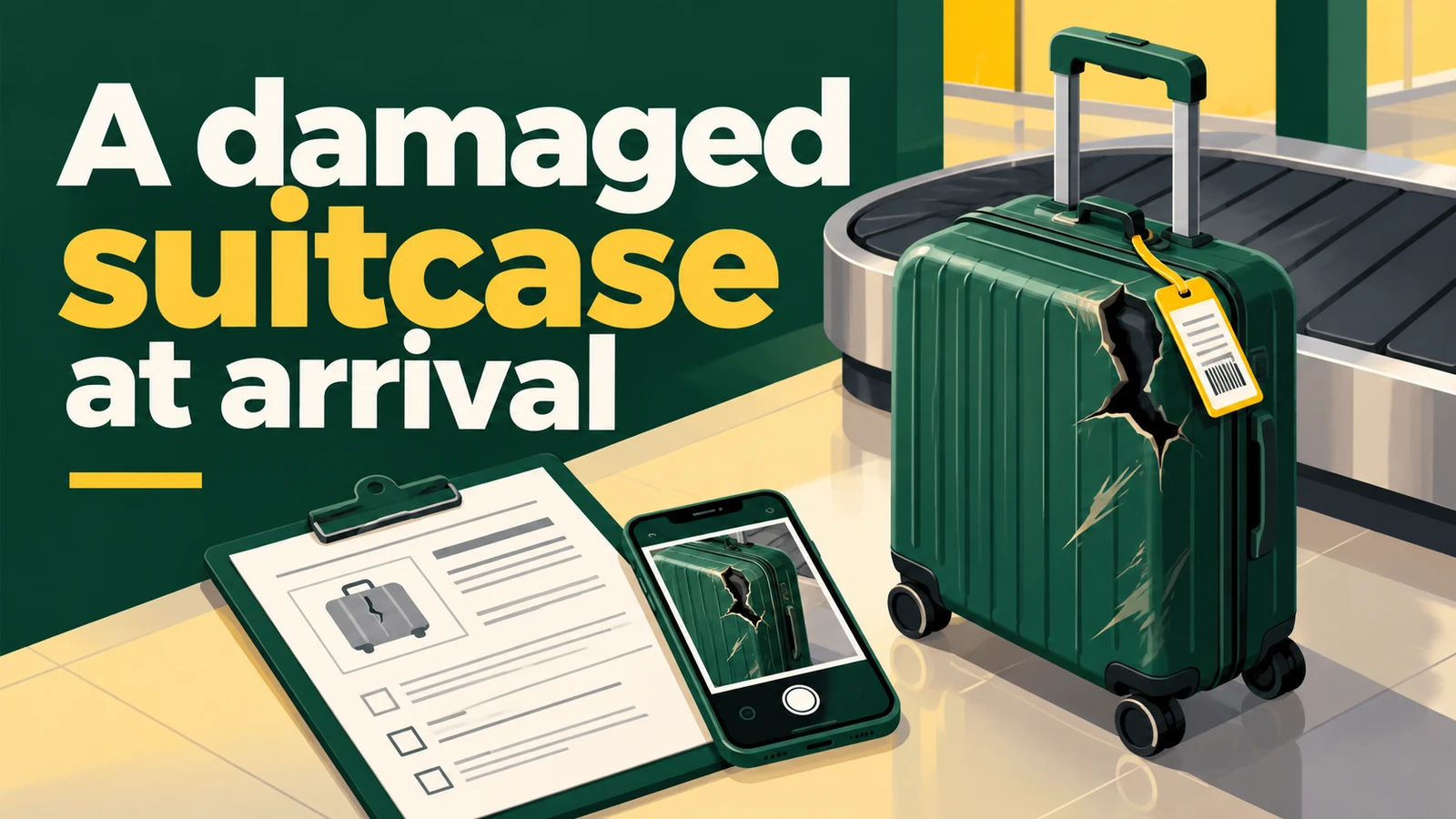
If your checked suitcase arrives damaged, photograph it and report the damage to the airline before leaving the baggage area. Keep the baggage tag, obtain a report reference and ask what further claim you must submit. A conversation at the counter, an incident report and a reimbursement request can be separate steps.
Start with what happened to this bag on this journey. A clear account of a broken wheel is more useful than a demand for an unspecified compensation amount. This guide uses U.S. DOT guidance and a current Delta reporting example; another carrier or itinerary can have different procedures.
Inspect the bag while the evidence is together
Check the shell, wheels, handles, zip and base before heading to your onward transport. Open the suitcase somewhere safe to see whether a visible impact also damaged the contents. Photograph the whole bag first, then the affected component and its attachment point. Keep a separate clear image of the airline tag and claim receipt.
Describe function as well as appearance: “the rear wheel is detached and the case cannot roll” is more informative than “the suitcase looks bad.” Distinguish a new crack from an older scratch. Do not remove labels, discard broken parts or attempt a repair before recording the condition.
If a travel companion has a photograph from departure, retain the original file. It can help establish the earlier condition, but do not imply that a preflight photograph exists if it does not. When there is no earlier photograph, give an honest description and supply the other evidence you have.
Report promptly: there is no universal 24-hour allowance
The airline's clock may be much shorter than expected. In its current damaged-baggage procedure, Delta specifies reporting within six hours of arrival for domestic tickets and seven days for international tickets. The older 24-hour domestic rule applies to tickets issued before October 8, 2025. These are Delta's published conditions, not a deadline to apply to every airline.
Delta also lists exceptions for mobility devices, hidden damage or pilferage, returned delayed bags, and bags checked by unaccompanied minors or passengers with disabilities. Several have specific 24-hour reporting provisions. Use the applicable exception and channel rather than assuming all damage can wait until tomorrow. Its normal sequence is the baggage service office, a file reference, then the damaged-bag claim form with supporting receipts.
If the office is closed or you have already left, contact the airline's official baggage channel immediately. Save the time, submission confirmation and any error message. Explain the circumstances accurately. Do not wait for a repair estimate before first notifying the carrier.
What the report and the claim should contain
| Evidence | What it establishes |
|---|---|
| Flight details and baggage receipt | The journey and checked bag concerned |
| Full-bag and close-up photographs | Condition, location and nature of the damage |
| Report reference and submission time | When and how the problem was notified |
| Model, age and purchase evidence | Identification and a basis for discussing value |
| Approved inspection or repair estimate | The proposed work and cost |
Before leaving the desk, ask whether the report itself completes the claim, which form comes next and whether there is a separate document deadline. Read the emailed report: a mistyped tag number or email address can make follow-up harder. Keep the files in one folder named with the claim reference.
For a Delta itinerary, our Delta baggage guide provides wider checked-bag context. The damage claim should still identify the actual bag, flight and loss rather than rely on a general baggage allowance.
Repair, replacement and compensation are different outcomes
The DOT's baggage guidance explains airline responsibility for transport damage while a checked bag is in the airline's control. Normal wear, existing damage and improper packing are relevant exclusions. However, wheels and handles cannot simply be excluded as entire categories. A worn surface and a newly broken component deserve different descriptions.
An irreparable bag does not automatically produce the price of a brand-new premium replacement. The bag's value and depreciation matter. Liability ceilings are limits, not standard payouts. Avoid entering the maximum allowed amount unless the documented loss supports what you request.
Ask who authorizes repair and whether the carrier wants to inspect or collect the suitcase. If you need another bag urgently, explain why, retain the itemized receipt and ask how that purchase will be treated. A necessary purchase and an approved reimbursable purchase are not automatically the same thing.
Keep the claim usable as your trip continues
Provide a contact method you can actually monitor abroad. Tell the handler if a proposed collection address will stop being valid after checkout. If an itinerary change affects your location, use the Delta flight-change guide for the booking issue and update the baggage case separately; changing the flight is not proof that the repair partner received your new address.
If the airline rejects the claim, request the reason in writing. Compare it with your evidence and the stated policy. An escalation should identify the disputed point, such as a report timestamp or newly broken wheel, and attach the relevant document. Sending the same unsupported demand repeatedly adds little.
Frequently asked questions
Should I leave the suitcase at the airport?
Only after agreeing on the handover process. Obtain a receipt identifying the bag, claim reference, recipient and intended next step. Photograph the condition before surrendering it and take out belongings you still need.
Can I claim without the original purchase receipt?
Ask what alternative evidence the carrier accepts. A model label, purchase email or account record may help establish identity and age. Missing a receipt is a reason to explain the available evidence, not to invent a purchase price.
Is a damaged wheel always ordinary wear?
No. DOT distinguishes ordinary wear from damage and says airlines cannot categorically exclude wheels, handles and similar components. Document the actual failure; responsibility still depends on the circumstances.
Can I repair the case before the airline responds?
Seek instructions first where practical. An unapproved repair may remove evidence or create a disagreement about cost. If an urgent temporary measure is unavoidable, record the original damage, reason and expense.
Does a baggage report guarantee payment?
No. It records the problem and supports the process. The airline still assesses responsibility, evidence, applicable conditions and the proposed remedy.
Official DOT and Delta information reviewed October 15, 2026. Reporting rules above are scoped to the cited guidance and carrier.
About William Smith
Content Writer Specialist for Rumbía’s English blog, focused on practical travel guidance, airline policy explainers, baggage and ticketing questions, and reader-friendly destination planning.
LinkedIn profile


Interested in travel updates?
Leave your email if you would like to hear from Rumbía about new guides and articles.
Your request is emailed to Rumbía. This form does not start an automatic newsletter subscription.